Case Study

Improving digital banking journeys inside a legacy environment.
Legacy systems, shifting customer expectations, and growing pressure to modernise made clarity and usability more important.
A banking UX case study focused on modernising journeys, improving accessibility, and reducing friction without a full rebuild.
Client
Co-op Bank
Sector
Banking
Role
UX Lead
Services
UX, User Research, Accessibility, Prototyping, Digital Transformation
Project overview
Modernising a bank built on outdated systems.
Co-op Bank was falling behind.
While competitors moved towards digital-first experiences, Co-op was still operating on ageing glossarySystemA system is a collection of interconnected components that work together to achieve a specific function or outcome.Open glossary term that limited what could be built and how quickly it could evolve.
At the same time, its customer base was different. Many relied on in-branch glossaryServiceA service is a component or function that performs a specific task within a system.Open glossary term and were less comfortable with digital banking.
I was brought in to glossaryLeadA lead is a potential customer who has shown interest in a product or service, typically by providing contact information or engaging with content.Open glossary term the glossaryDigital TransformationDigital transformation is the process of using digital technology to fundamentally change how an organisation operates and delivers value.Open glossary term, improving the experience while working within the glossaryConstraintsConstraints are limitations or restrictions that impact how a product or solution can be designed or built.Open glossary term of legacy technology and supporting customers through the shift to digital.
This wasn’t a clean rebuild. It was an overhaul, done in place.
What was happening
The experience was outdated, and the system couldn’t keep up.
The digital experience didn’t meet modern expectations.
Journeys were complex, difficult to navigate, and often failed to meet serviceAccessibilityFind accessibility issues early, improve usability, and build products that are more inclusive, usable, and compliant.Open service standards. For many users, particularly older customers, this made everyday banking harder than it needed to be.
Behind the scenes, the technology was a limiting factor. glossaryLegacy SystemA legacy system is an outdated system that is still in use, often due to its critical role.Open glossary term restricted what could be changed, how quickly it could be delivered, and how far the experience could be pushed.
Internally, this created tension. The need to modernise was clear, but the glossaryInfrastructureInfrastructure refers to the underlying systems and resources that support applications and services.Open glossary term couldn’t support a full glossaryTransformationTransformation is a fundamental change in how a system, organisation, or experience operates, often involving structure, processes, and behaviour.Open glossary term in one move.
At the same time, customers needed to be brought with the change, not left behind by it.
Approach
Overhaul what exists. Improve it step by step.
The approach focused on making meaningful improvements within real glossaryConstraintsConstraints are limitations or restrictions that impact how a product or solution can be designed or built.Open glossary term.
Rather than waiting for a full rebuild, key journeys were prioritised and redesigned incrementally, delivering immediate value while working alongside ongoing glossarySystemA system is a collection of interconnected components that work together to achieve a specific function or outcome.Open glossary term updates.
Heavy prototyping was used to explore solutions, test feasibility, and align glossaryStakeholderA stakeholder is any individual or group with an interest in a product, project, or outcome, including internal teams and external parties.Open glossary term before development. This helped bridge the gap between ambition and what the technology could support.
serviceUser ResearchUnderstand user behaviour, validate ideas, and make clearer product decisions with evidence you can act on.Open service ensured decisions were grounded in real glossaryBehaviourBehaviour refers to how users interact with a system, including actions, patterns, and responses.Open glossary term, particularly for customers less familiar with digital glossaryServiceA service is a component or function that performs a specific task within a system.Open glossary term.
serviceAccessibilityFind accessibility issues early, improve usability, and build products that are more inclusive, usable, and compliant.Open service was treated as a core requirement, not an afterthought. Audits and testing ensured the experience became more usable for a wider range of customers.
At the same time, work extended beyond the product itself. Collaboration with branch staff helped support customers through the transition, building glossaryConfidenceConfidence is the level of certainty in a decision or outcome based on available evidence.Open glossary term in digital banking.
Key decisions
Work within constraints, but don’t be limited by them.
A key decision was to accept that the glossarySystemA system is a collection of interconnected components that work together to achieve a specific function or outcome.Open glossary term couldn’t be replaced overnight.
Instead of forcing change, the focus was on improving what existed, step by step. Delivering progress early, while laying the groundwork for longer-term glossaryTransformationTransformation is a fundamental change in how a system, organisation, or experience operates, often involving structure, processes, and behaviour.Open glossary term.
Another critical decision was designing for the actual customer base, not an ideal one.
This meant creating experiences that were simple, clear and approachable, particularly for users who were less confident online.
Bridging the gap between digital and in-branch banking was essential. The experience had to feel supportive, not forced.
Finally, proving value became a priority. Demonstrating that digital could work for both the business and its customers was key to unlocking further investment.
Solution
A modernised experience built on top of legacy systems.
The result was a significantly improved digital experience, delivered incrementally within the glossaryConstraintsConstraints are limitations or restrictions that impact how a product or solution can be designed or built.Open glossary term of the existing glossaryInfrastructureInfrastructure refers to the underlying systems and resources that support applications and services.Open glossary term.
Key journeys were simplified, making it easier for users to navigate and complete tasks.
serviceAccessibilityFind accessibility issues early, improve usability, and build products that are more inclusive, usable, and compliant.Open service improvements ensured the glossaryPlatformA platform is a system or environment that enables users, services, or applications to interact, build, or operate.Open glossary term became more inclusive, meeting required standards and improving glossaryUsabilityUsability is how easy and efficient it is for users to complete tasks within a product. It focuses on clarity, simplicity, and reducing effort so users can achieve their goals without confusion or friction.Open glossary term for all customers.
One of the most impactful outcomes was the introduction of Co-op’s first fully online loan application.
Customers could apply, receive approval, and access funds within minutes. A major shift for a bank that had previously relied heavily on in-branch glossaryProcessA process is a defined sequence of steps used to achieve a specific outcome.Open glossary term.
The experience balanced modern expectations with the realities of the glossarySystemA system is a collection of interconnected components that work together to achieve a specific function or outcome.Open glossary term behind it.
Experience map
A closer look at the work in context.
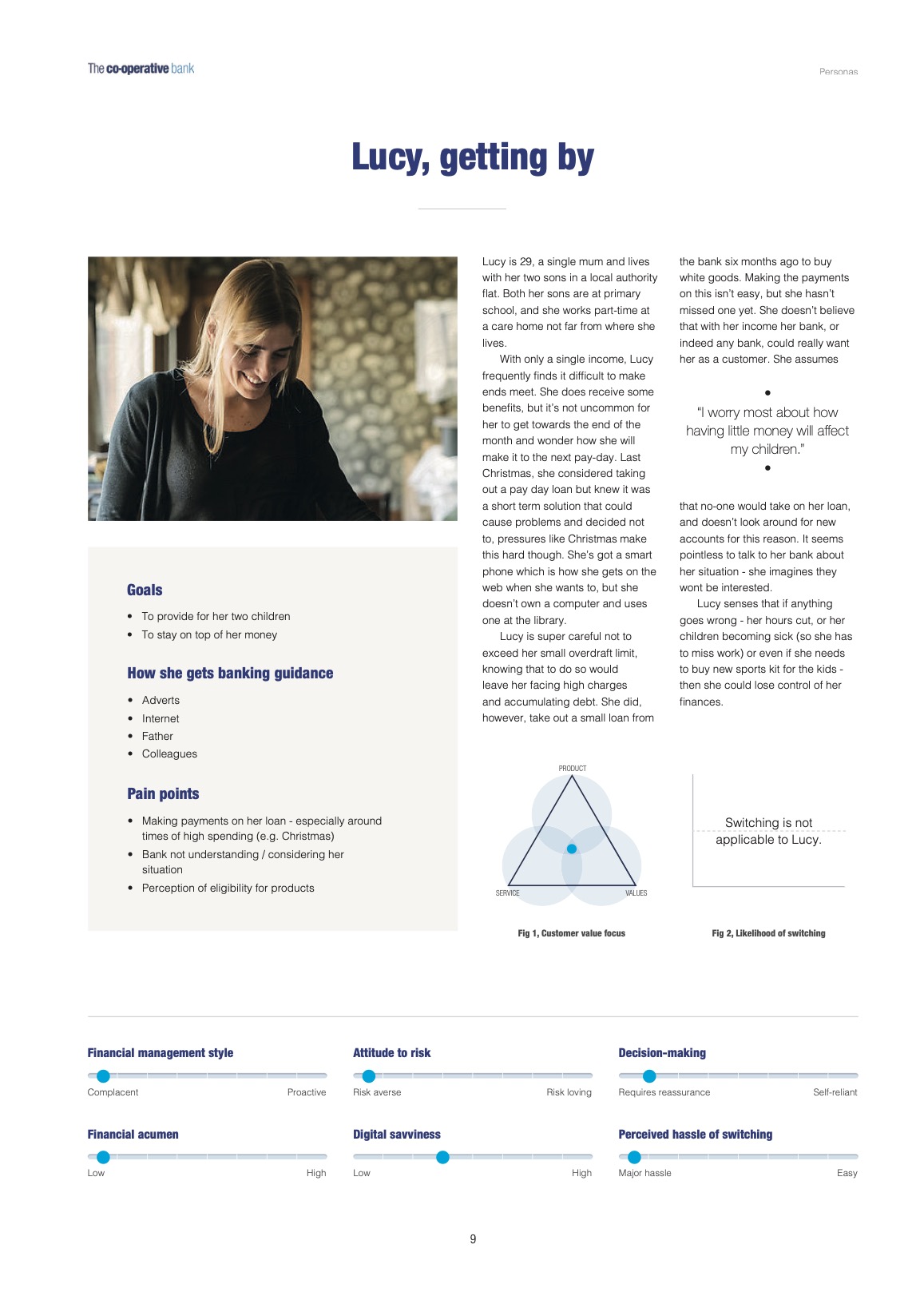
Gallery image from the Co-op Bank case study.
01/03
Outcomes
Progress without disruption, and proof that change was possible.
The digital experience improved significantly without requiring a full glossarySystemA system is a collection of interconnected components that work together to achieve a specific function or outcome.Open glossary term rebuild.
serviceAccessibilityFind accessibility issues early, improve usability, and build products that are more inclusive, usable, and compliant.Open service issues were addressed, reducing barriers for a wider range of users.
Customers were better supported in moving to digital, with a clearer and more approachable experience.
The success of the online loan application demonstrated the value of digital investment, helping secure further backing for continued glossaryTransformationTransformation is a fundamental change in how a system, organisation, or experience operates, often involving structure, processes, and behaviour.Open glossary term.
Co-op moved from being behind the curve to having a clear path forward.
Reflection
Transformation doesn’t start with technology. It starts with reality.
This project reinforced that glossaryDigital TransformationDigital transformation is the process of using digital technology to fundamentally change how an organisation operates and delivers value.Open glossary term isn’t always about rebuilding from scratch.
In many cases, the glossarySystemA system is a collection of interconnected components that work together to achieve a specific function or outcome.Open glossary term you inherit defines the path you take.
The role of UX is to find a way forward within those glossaryConstraintsConstraints are limitations or restrictions that impact how a product or solution can be designed or built.Open glossary term. To improve what exists, while gradually shaping what comes next.
At the same time, glossaryTransformationTransformation is a fundamental change in how a system, organisation, or experience operates, often involving structure, processes, and behaviour.Open glossary term isn’t just technical. It’s human.
If customers don’t feel comfortable, confident and supported, the best digital solution won’t be used.
Real progress happens when both the glossarySystemA system is a collection of interconnected components that work together to achieve a specific function or outcome.Open glossary term and the people move forward together.